One Song, Many Voices
What if everything that lives—humans, trees, snakes, whales, even microscopic bacteria—is simply expressing different verses of the same song? Modern science calls it the DNA, while countless indigenous cultures speak of it as the life-force, the serpent, the cosmic breath, or the spirit that sings creation into existence. Though they use different languages, both are pointing to the same truth: life is unified by an invisible intelligence that speaks in patterns, vibrations, and light.
For the shaman in the Amazon, this intelligence is alive, conscious, and in constant communication. It appears as serpents made of light, ladders rising to the heavens, or twin beings dancing in spirals. For the molecular biologist, the same truth is revealed through microscopes: a double helix twisting gracefully inside each cell, encoding the story of every living being on Earth.
Across cultures and time, humans have attempted to describe, draw, and decode this great mystery. And in doing so, they have used astonishingly similar symbols.
Serpents as the First Teachers of Life
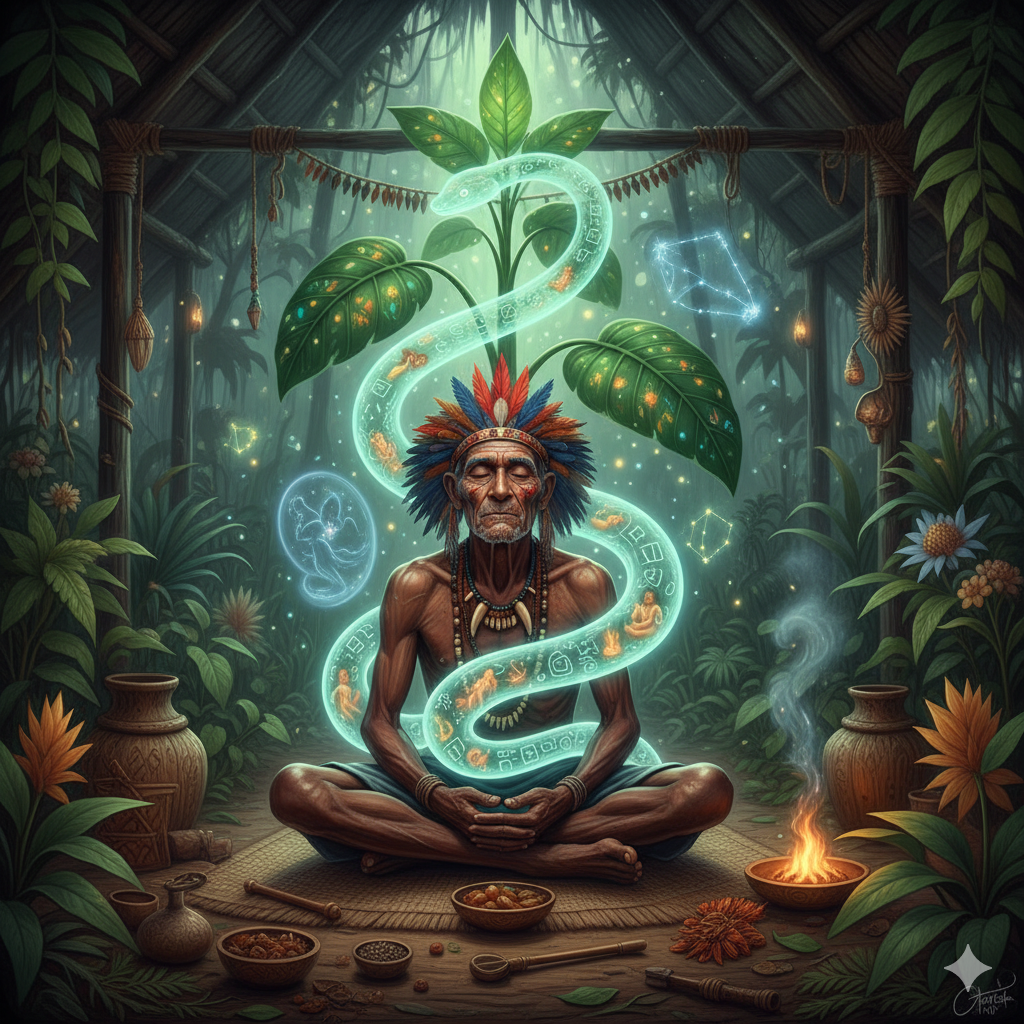
In the Amazon, shamans speak of serpents that reside in sacred plants, teaching healing and knowledge through visions.
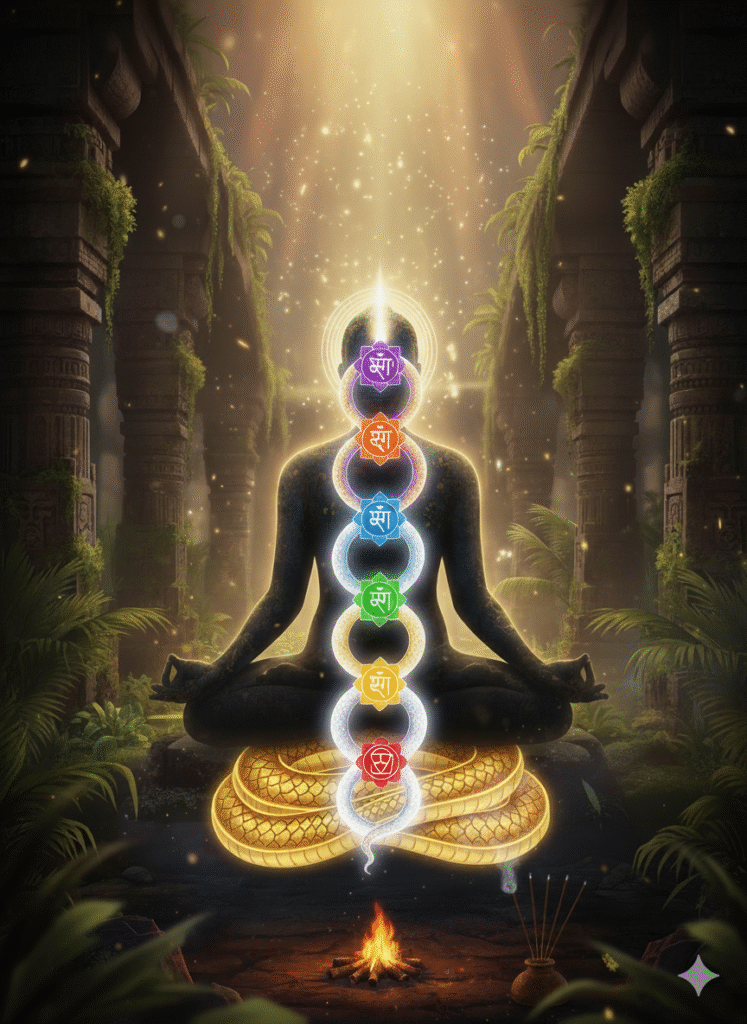
In India, the serpent (Nāga) is a guardian of wisdom and the keeper of the life force known as Kundalini, depicted as a coiled energy rising through the spine.
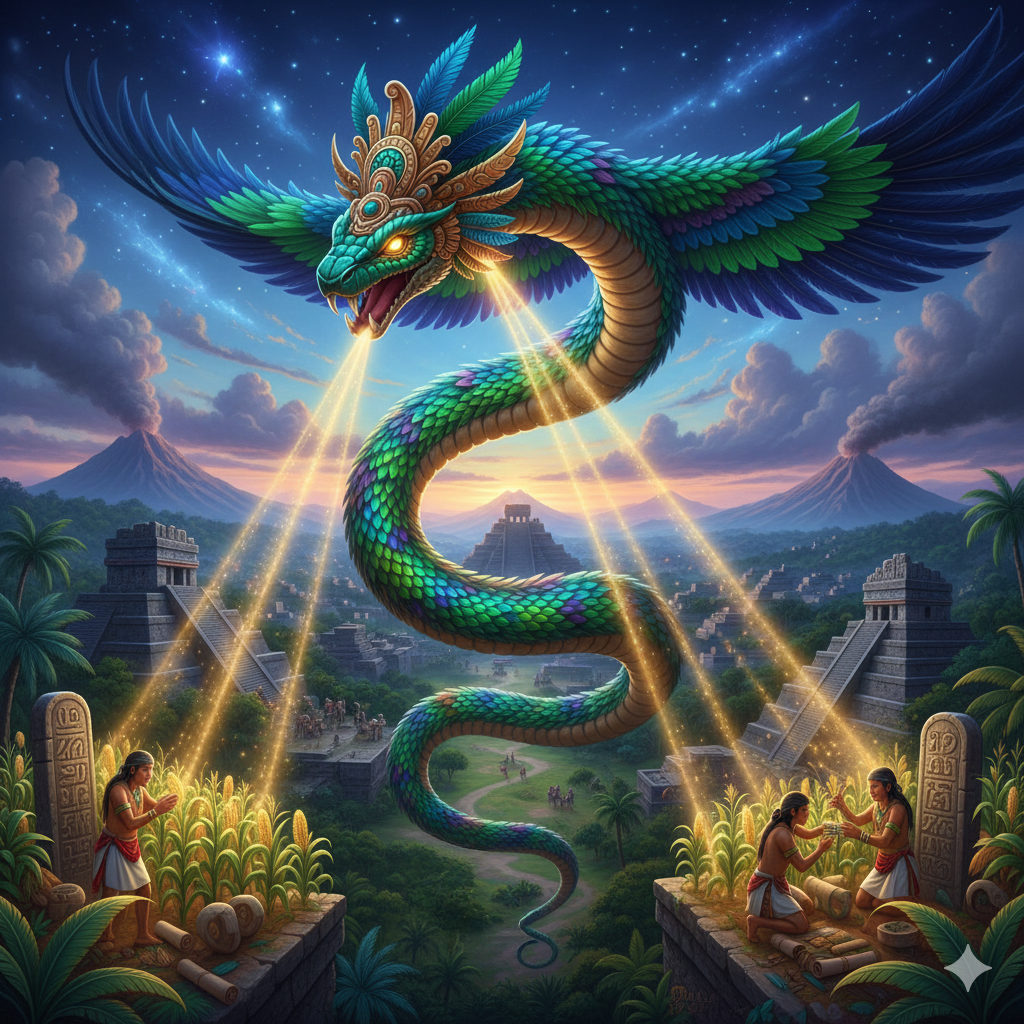
In Mesoamerican mythology, Quetzalcoatl, the feathered serpent, is both the creator of humanity and the bringer of agriculture, writing, and astronomy.
In ancient Egypt, the serpent was seen both on the pharaoh’s crown as a symbol of divine authority and coiled beneath the Earth as a life-renewing power.
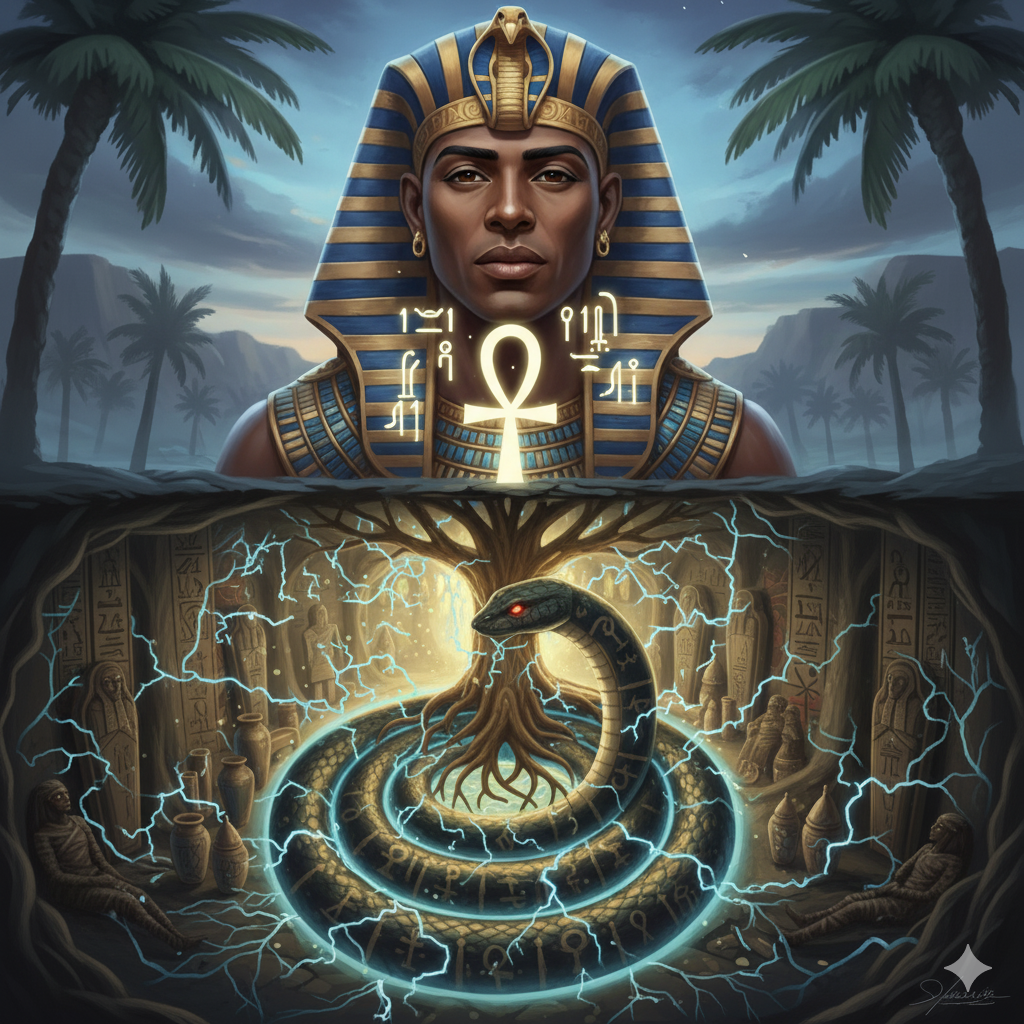
These serpents are living symbols of transformation, regeneration, and the hidden force that connects heaven, earth, and all living beings.
The Double Helix Hidden in Myth
When Francis Crick and James Watson discovered the double-helix structure of DNA in 1953, they unknowingly uncovered a symbol that already existed worldwide in myths, carvings, and sacred art:
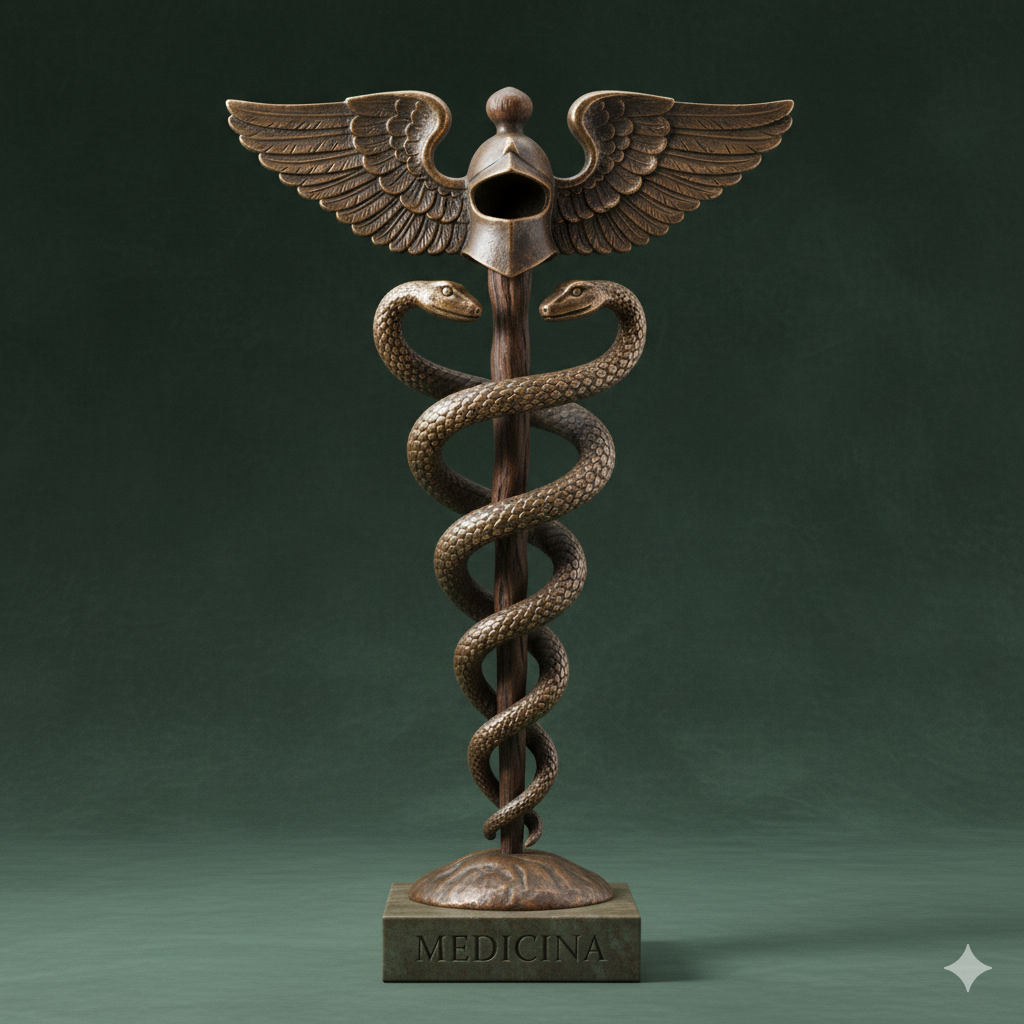
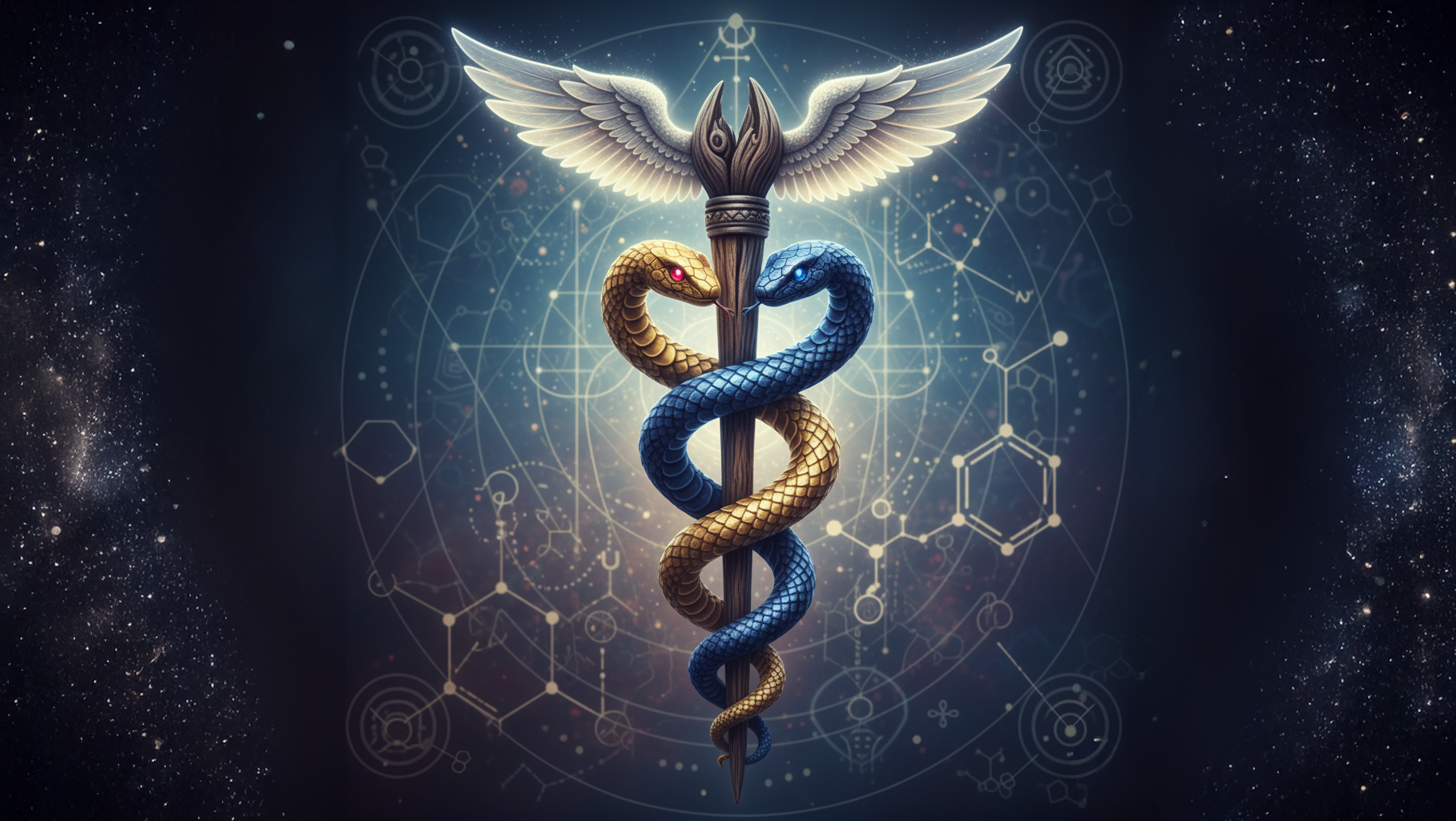
The Caduceus, used as a symbol of medicine, shows two serpents coiling around a central staff.
The two serpents represent dual energies — male and female, light and dark, reason and intuition — moving in harmony.
The central staff represents the spinal column or life axis, and the wings signify expanded consciousness.
Their intertwined motion mirrors DNA’s double helix, encoding and maintaining life through balance and communication.
In essence, healing occurs when the opposites within us — body and mind, matter and spirit — are brought into alignment, just as the two DNA strands dance in perfect synchronization.
Ancient carvings in Mesopotamia show intertwined serpents associated with divine knowledge.
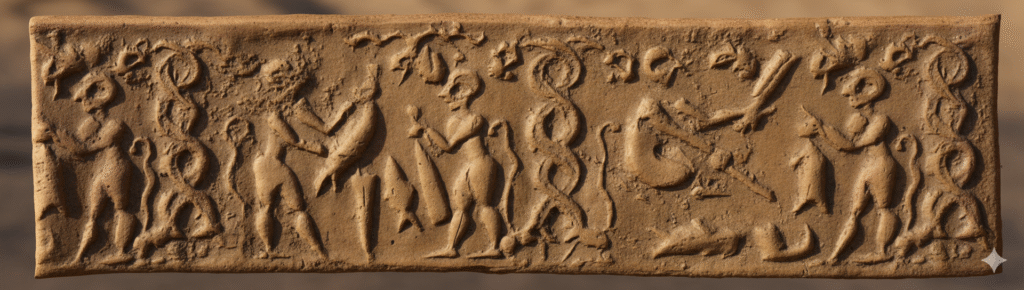
The serpent here is not evil, but a guardian of wisdom and transformation.
The intertwining symbolizes the unity of heaven and earth, the material and the divine — knowledge that flows between realms.
These carvings likely represented divine intelligence shaping life — much like how DNA encodes the blueprint of existence.
In this context, the serpent is the messenger between gods and humans, the living metaphor for communication at the molecular and cosmic scale.
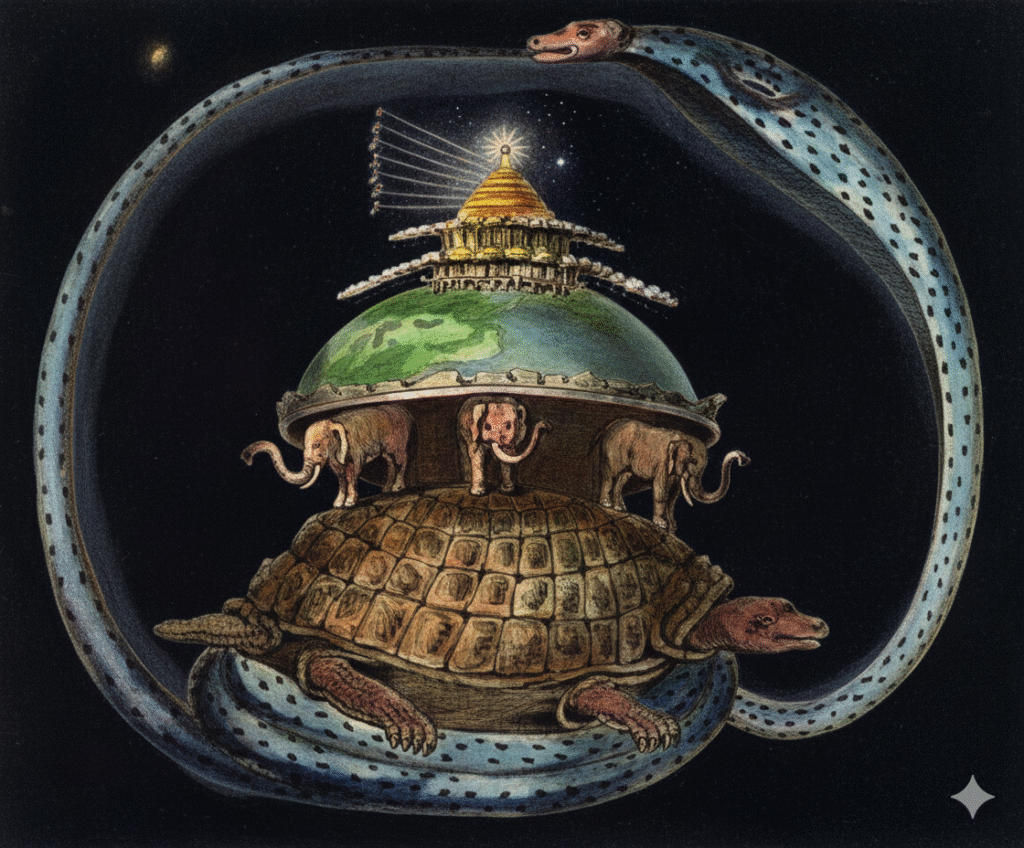
In Hindu temples, cosmic serpents coil around Mount Meru, the axis of the universe—just as DNA coils around histones at the center of the cell.
The serpents represent life force (Kundalini) — the coiled energy at the base of creation.
Their spiraling motion mirrors how DNA coils around histones, the protein “mountain” at the cell’s center.
Together they depict the structure of existence — energy rising through form, consciousness animating matter.
Life is built on spirals of energy, and those spirals are the bridges between matter and spirit.
The Nagamani: The Serpent’s Crystal of Light
One of the most fascinating myths connecting biology and spirituality is that of the Nagamani, or serpent gem. In India, it is believed that old cobras store unused venom in a gland near the head—often said to be around the pineal gland—where it crystallizes over time. This crystal, called Nagamani, glows under the light of the moon or stars and is believed to attract animals and insects, allowing the serpent to feed effortlessly.
Possessing a Nagamani is said to bring health, prosperity, and mystical insight, but the benefits of the crystal cannot be reaped if taken forcefully. It is only released when the serpent willingly sheds it
While science does not confirm the literal existence of a glowing crystal hidden inside a serpent’s head, the symbolic correspondences across cultures are too precise to ignore. The Nagamani—a radiant gem said to bestow wisdom, immortality, and spiritual power—appears to be a metaphor for a biological light source already present within every living being.
Modern research shows that DNA emits biophotons—ultra-weak pulses of light that may enable cells to communicate at the speed of light. The pineal gland, long regarded by ancient traditions as the gateway to higher consciousness, contains calcite crystals capable of piezoelectricity—meaning they can convert mechanical pressure into light. Here, myth meets molecular biology: a shining crystal in the head that awakens perception.
This serpent-gem symbolism repeats globally:
1. The Desana of the Northwest Amazon – The Brain as the Cosmic Serpent
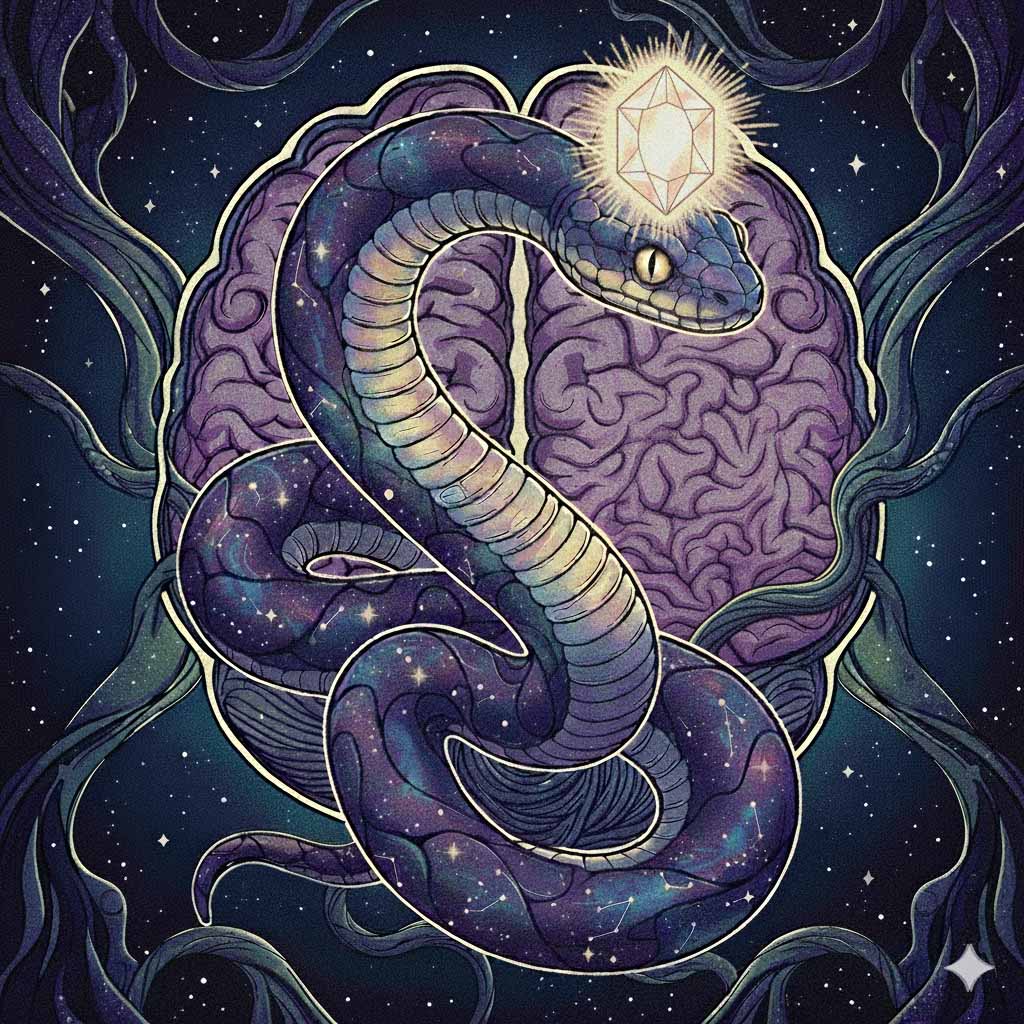
The Desana people describe a colossal anaconda coiled along the central channel of the brain. Near its head—at the location corresponding to the pineal gland—a radiant crystalline structure emits light. They say this light is what allows human beings to “see thought.” The pineal crystal becomes the Nagamani: the light-bearing jewel of inner vision.
2. Hindu Yogic Tradition – Kundalini and the Jewel of Enlightenment
In yogic texts, the serpent energy (Kundalini) rises through the spine and illuminates the bindu—a point of radiant nectar at the crown of the head. This luminous bindu is depicted as a shining gem, often called chintamani or Nagamani, symbolizing the awakening of divine consciousness within the brain’s subtle centers.
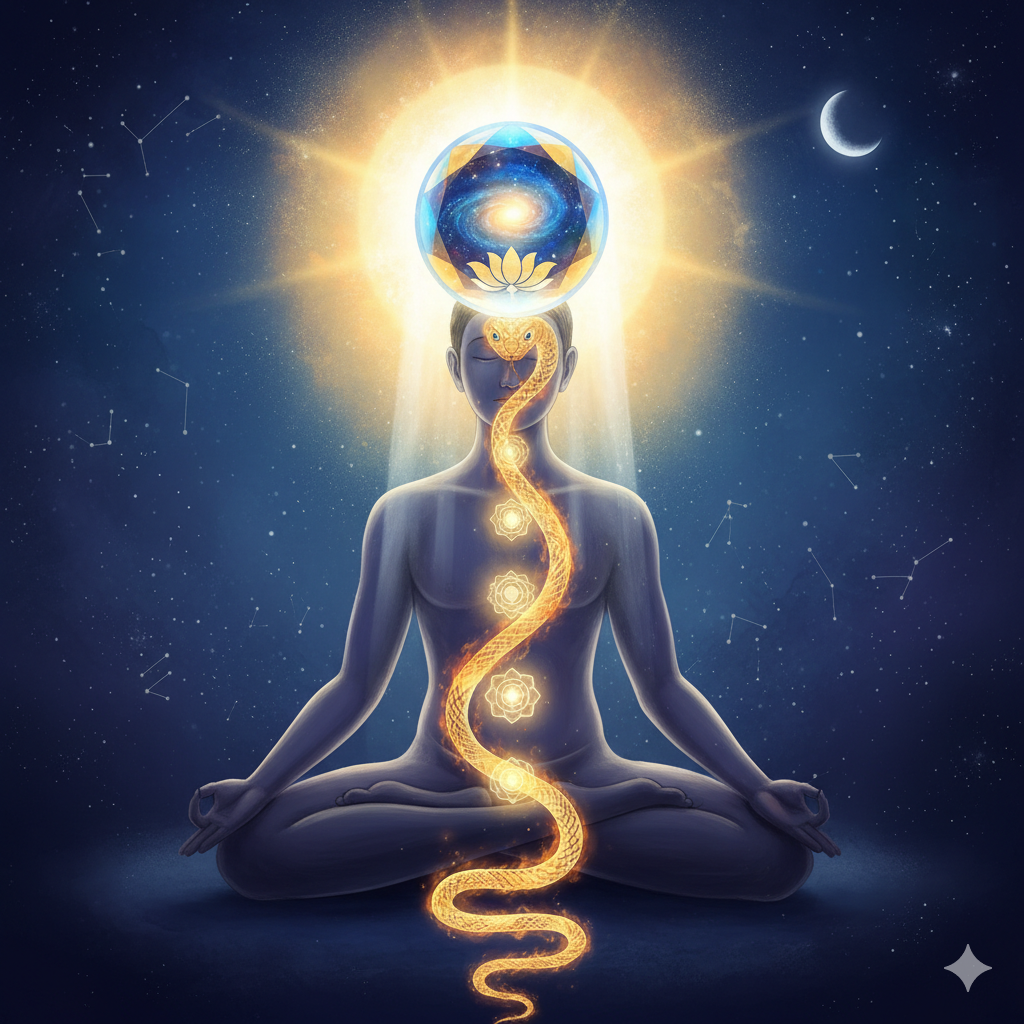
3. Ancient Egypt – The Uraeus and the Serpent of Illumination
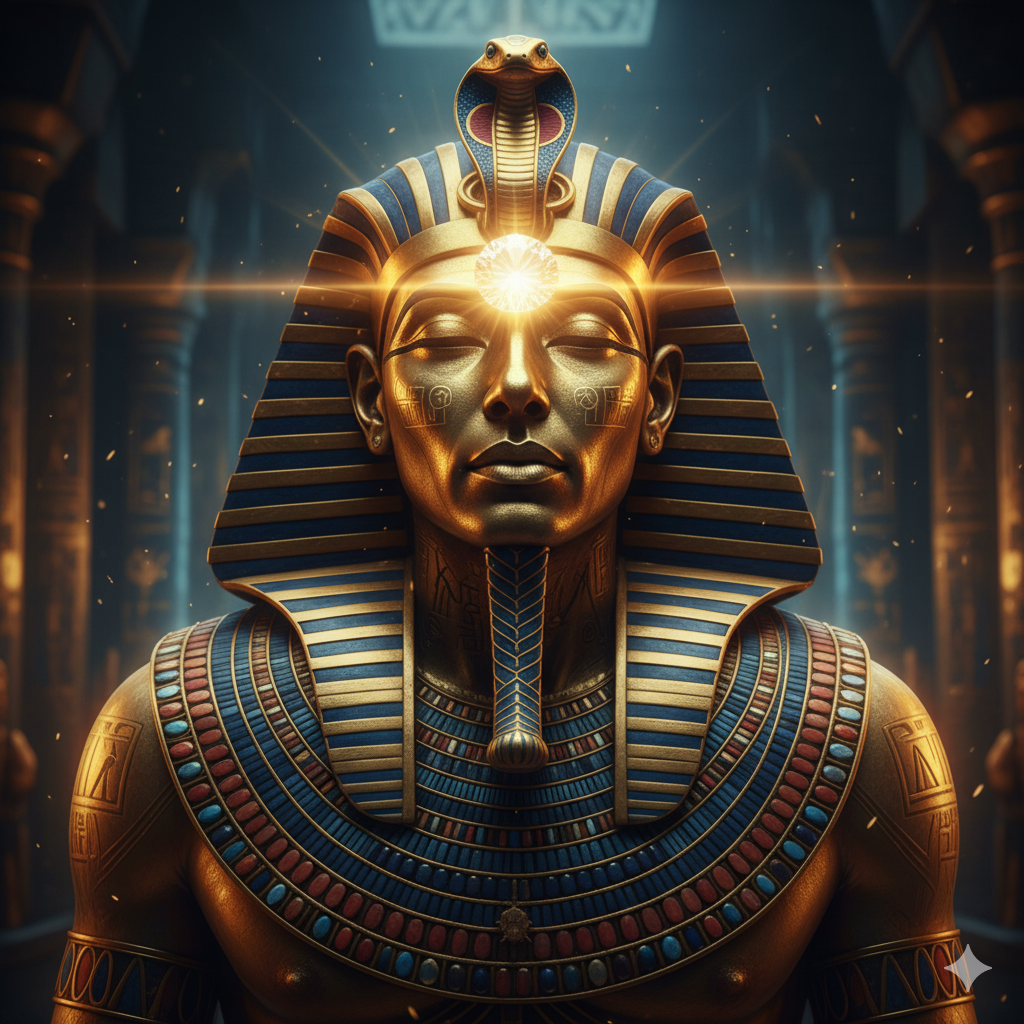
The pharaohs wore the uraeus, a rearing serpent on their forehead, symbolizing awakened divine sight. At the point between the eyes—the pineal region—the serpent carried the “diamond of Ra,” a symbol of eternal light. This is another echo of the Nagamani as the shining jewel of living intelligence present within the human body.
Hallucinations as Molecular Microscopy
What if ancient shamans were not “imagining” reality—but actually perceiving it at a deeper level than the average human mind can access?
Modern science is built on magnification—microscopes, telescopes, sensors. Shamanic knowledge, on the other hand, is built on perception, activated by the mind itself in an altered state of consciousness. Jeremy Narby proposes a radical idea:
Hallucinations may not be random illusions—they might be a form of biological perception, a natural technology that allows shamans to observe the molecular world.
Visions That Map to Molecular Reality
Anthropologist Reichel-Dolmatoff spent years with Amazonian tribes and was stunned by what their shamans described during ayahuasca ceremonies. They spoke of:
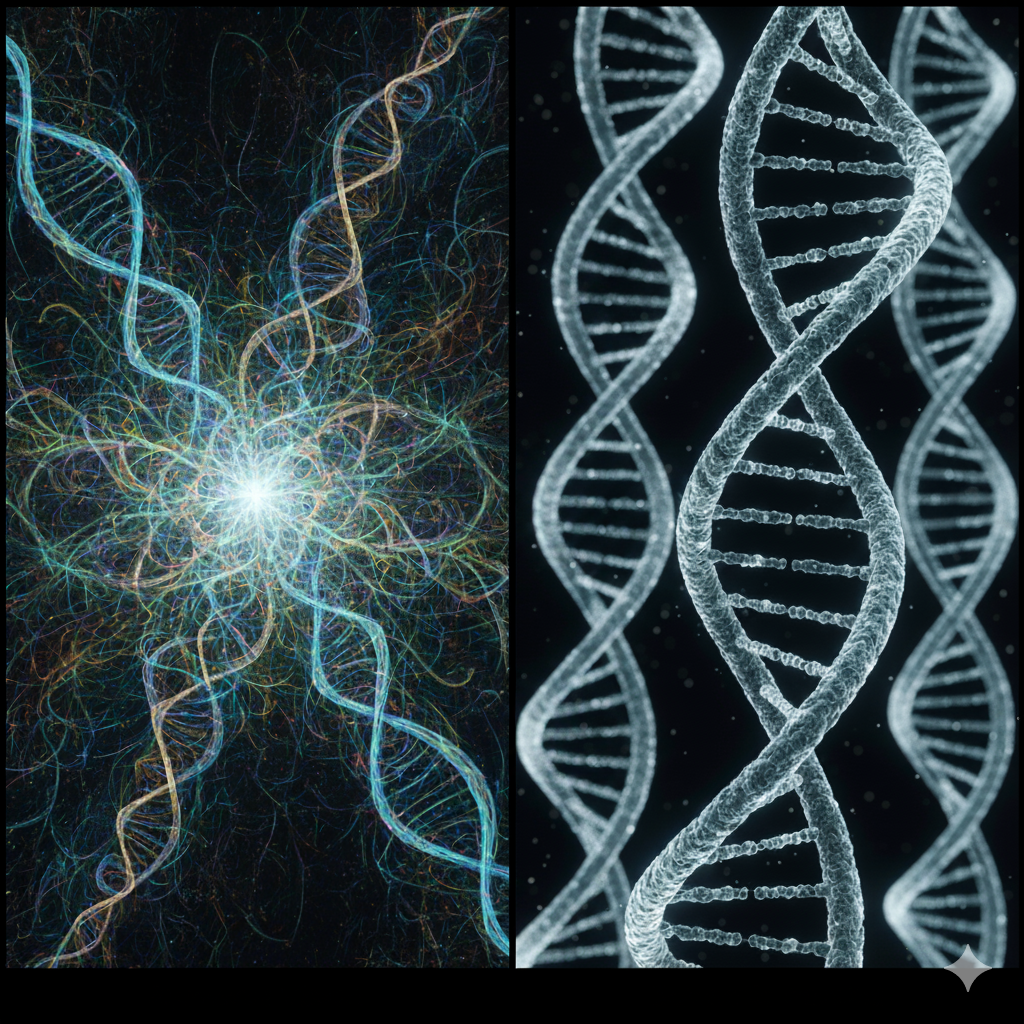
“Threads of light weaving together”
Under the microscope, DNA molecules appear as luminous, interlacing filaments. Their helical strands literally weave the code of life—threads of light carrying genetic information.
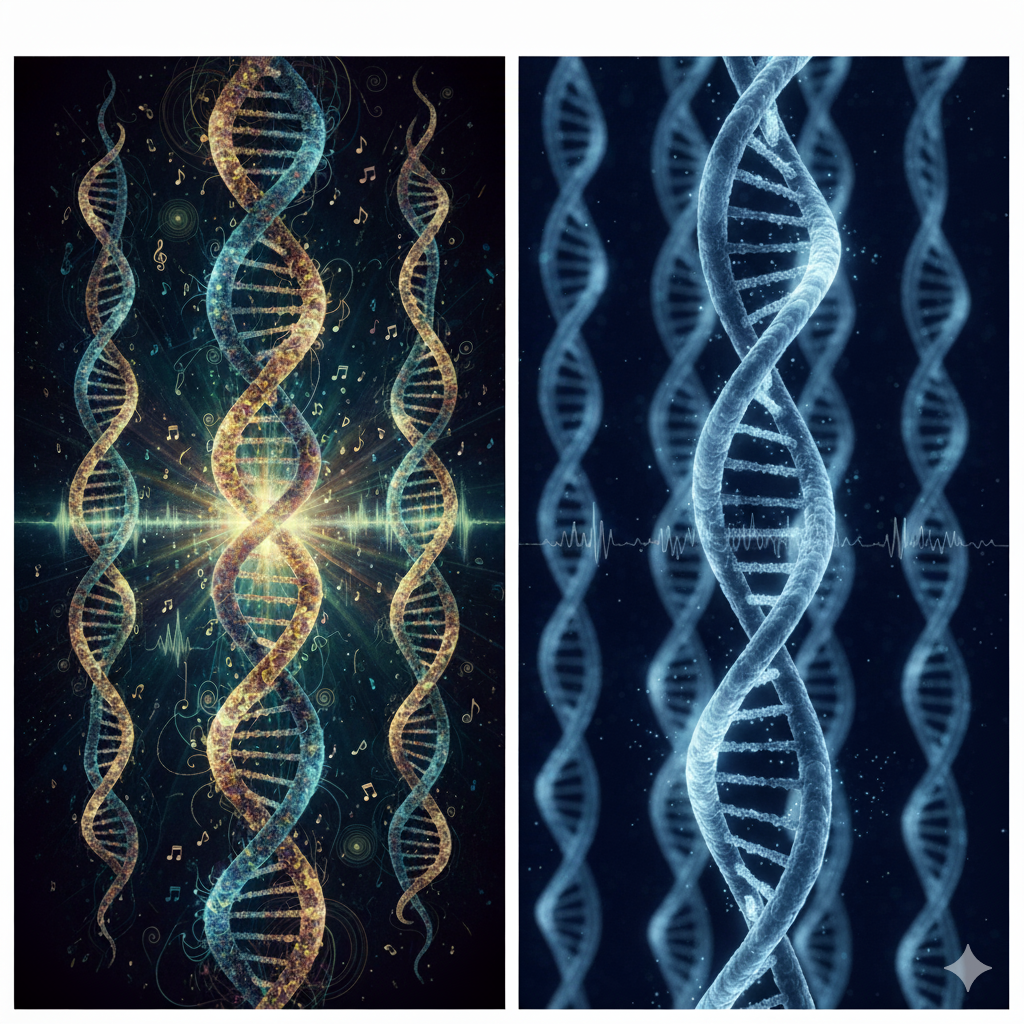
“Spirals that sing”
DNA’s double helix is a spiral that vibrates and emits biophotons—ultra-weak light produced by living cells. Recent research suggests these light emissions may help cells communicate, like a molecular song. (PMC)
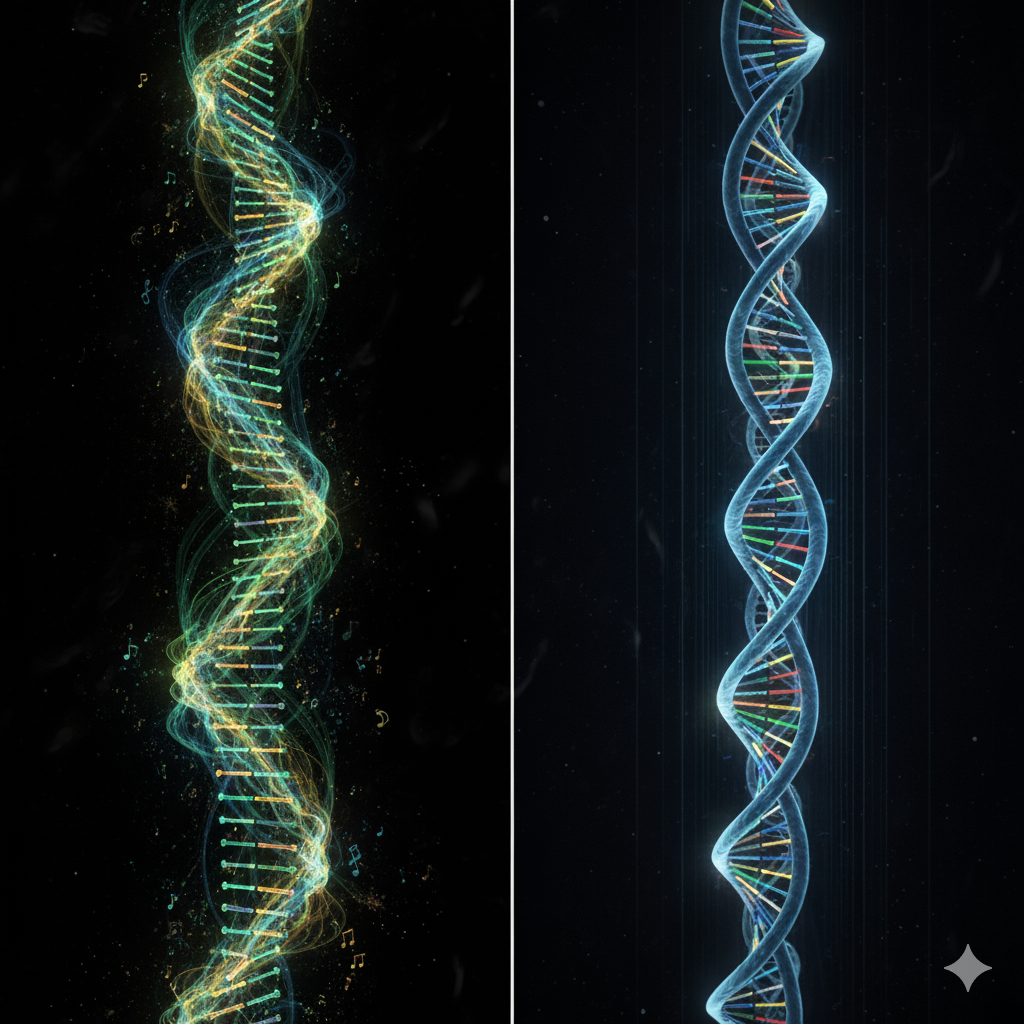
“Ladders stretching into infinity”
The iconic ladder structure of DNA, with its rungs of paired bases (A–T and C–G), extends endlessly in cellular replication. Each rung encodes life’s blueprint—a ladder linking generations across time.
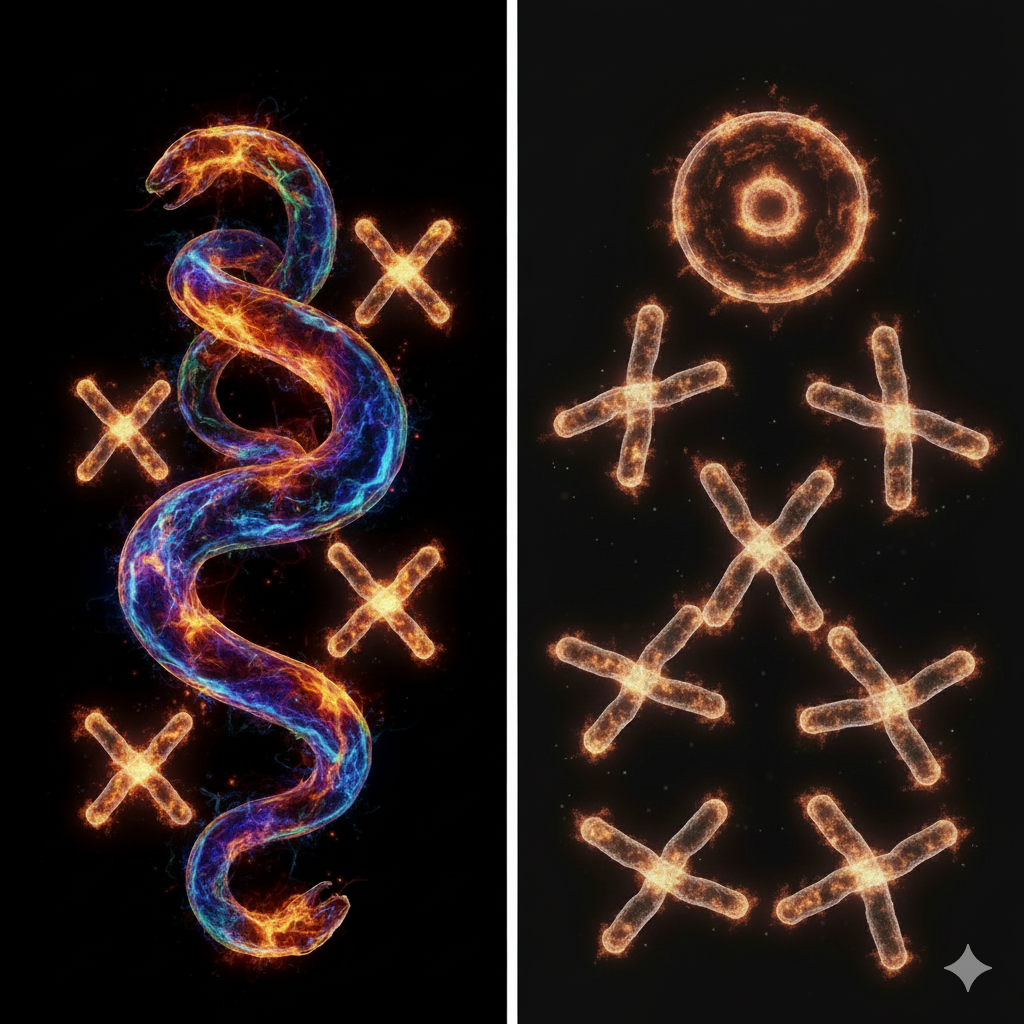
“Patterns wrapping and unwrapping like serpents of fire”
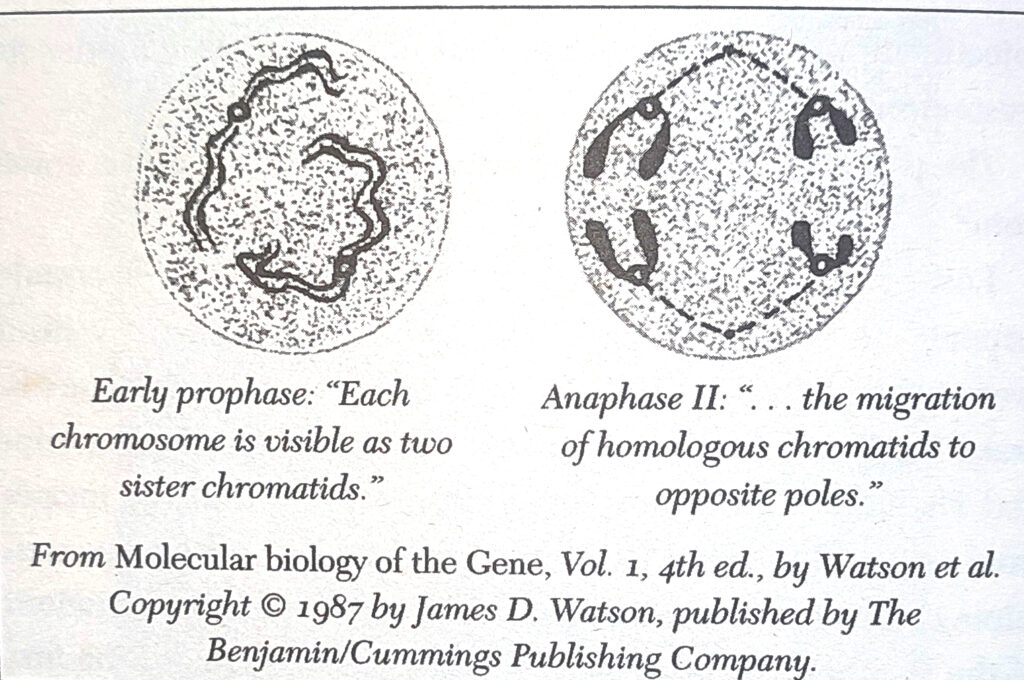
Inside every cell, chromosomes coil and uncoil dynamically during division. This process releases energy and light, resembling fiery serpents in motion—an image long described by shamans as the essence of creation.

Shaman Pablo Amaringo, once a healer in the Peruvian Amazon, later became an artist after retiring from practice. His paintings—created from memory of his visions—astonished scientists.
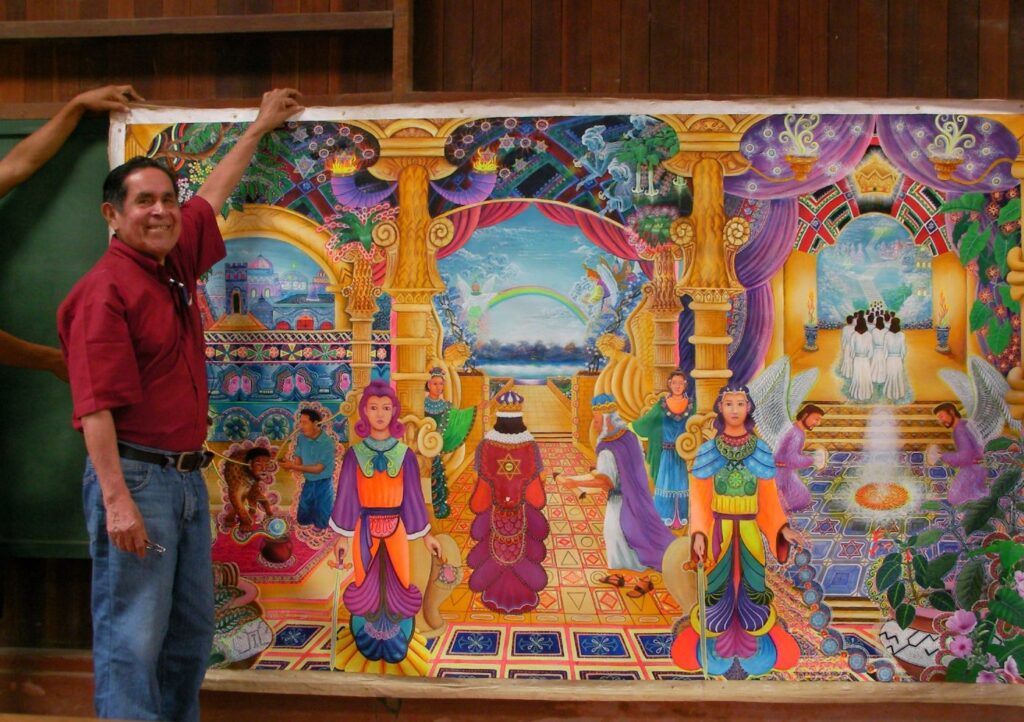
The images showed:
- Chromosome-like structures
- Cellular mitosis (cell division)
- Synaptic networks and neuronal firing patterns
- Fractal geometry matching patterns observed at microscopic and quantum levels
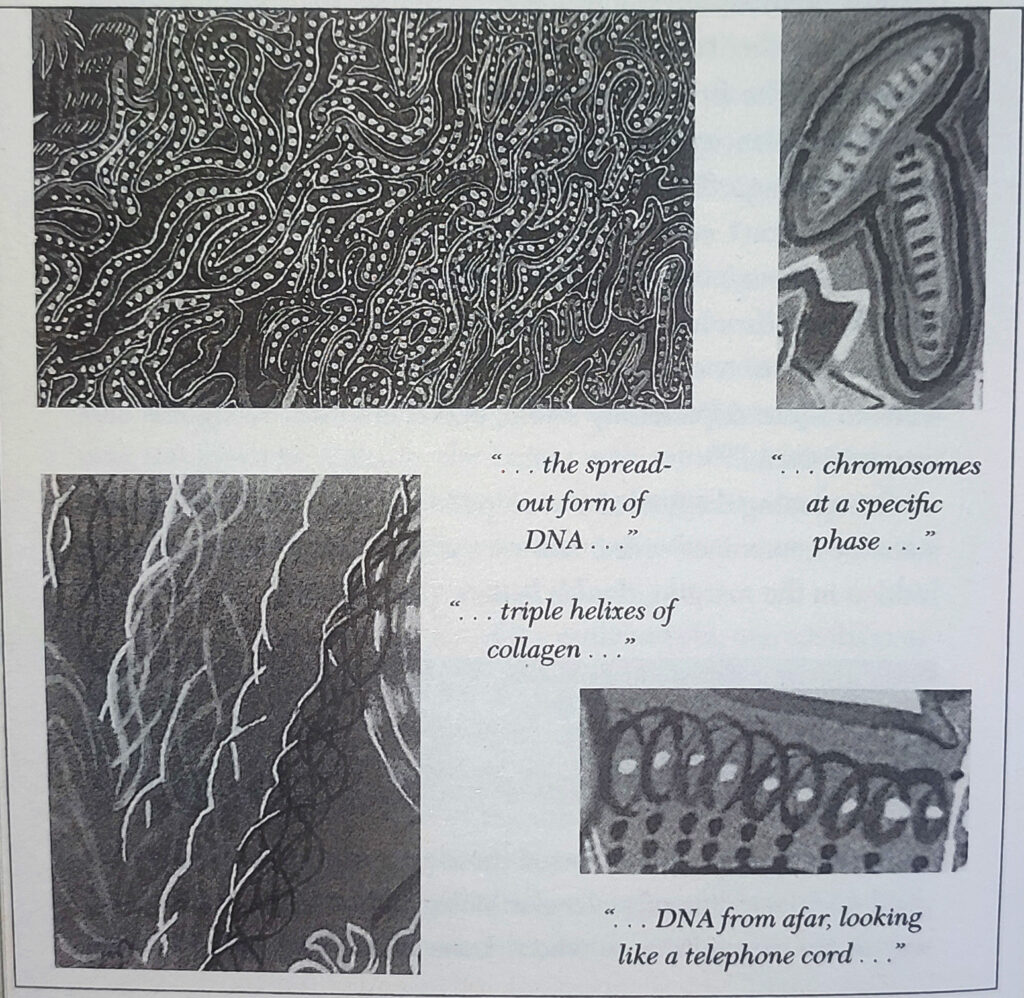
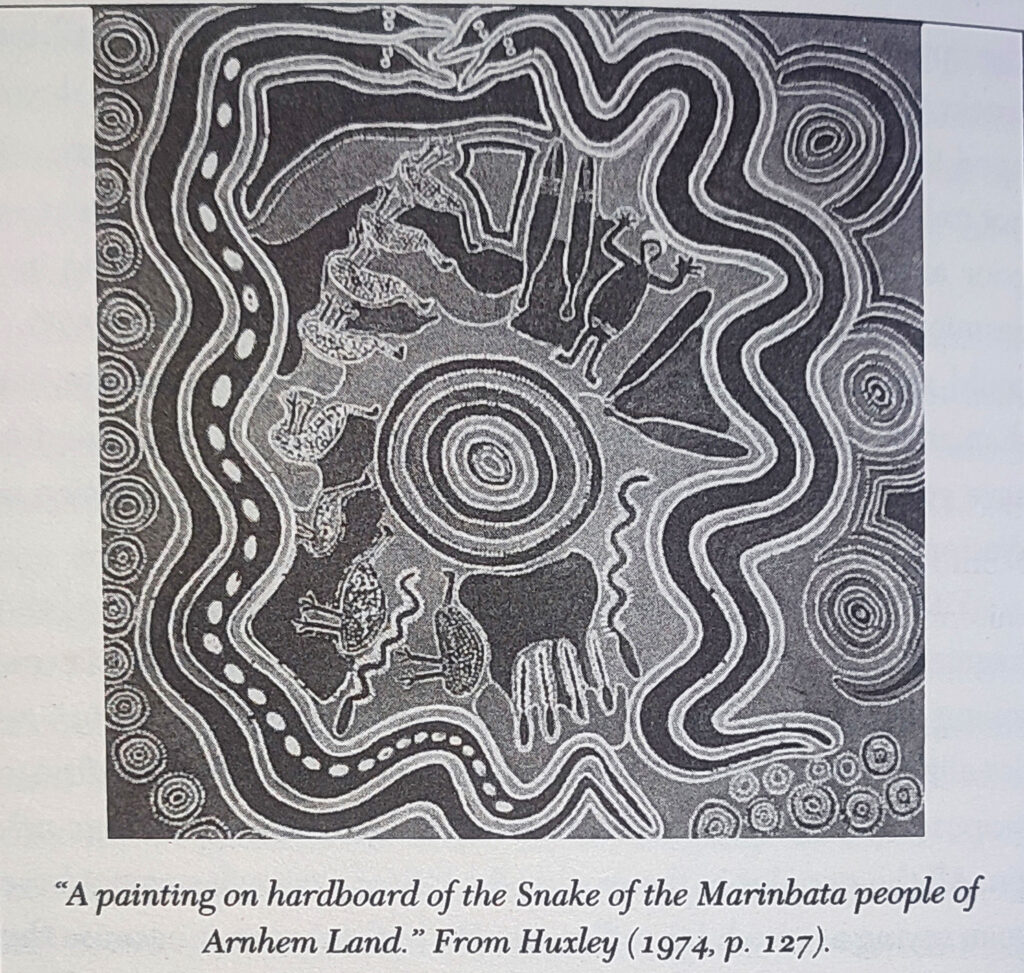
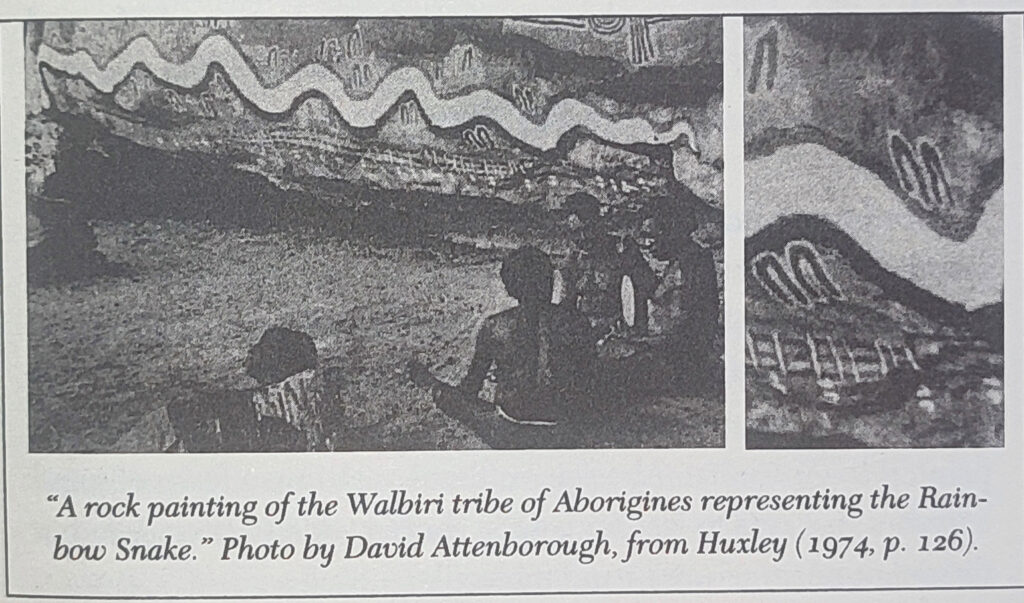
The following images from The Cosmic Serpent illustrate what Jeremy Narby observed in shamanic vision art—repeating patterns of spirals, zigzag staircases, entwined vines, and twin serpents. Hidden within these luminous scenes are shapes strikingly similar to DNA’s double helix, chromosomes, and cellular structures.

The Brain as a Biological Interface
Hallucinogenic compounds like DMT (dimethyltryptamine), found naturally in plants and even produced in the human brain, specifically bind to serotonin receptors. Modern neuroscience shows that these substances:
- Disengage the brain’s default filters, allowing access to information normally inaccessible to waking consciousness.
- Increase neural connectivity, linking areas of the brain that don’t usually communicate.
- Enhance pattern recognition, allowing the mind to see structures within structures—from the cellular to the cosmic.
As psychiatrist Dr. Rick Strassman, who led FDA-approved DMT studies in the 1990s, observed:
“Under the influence of DMT, volunteers reported traveling to realms of light and intelligence. Many described seeing intricate biological structures—down to strands of fibers that looked alive.”
This mirrors shamanic traditions which assert:
“The plants teach. They show you how life is woven together.”
Music, Light, and the Language of the Body
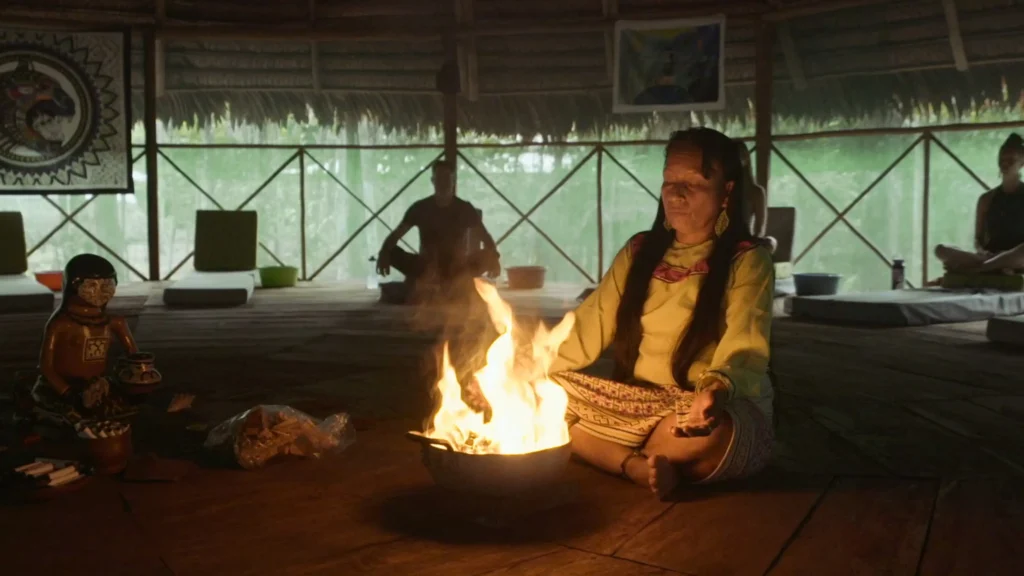
During ayahuasca ceremonies, icaros—shamanic healing songs—are not mere background music. Shamans say that the songs are seen as patterns of light. When the icaro changes, the visions change too.
Modern science is beginning to confirm that:
Sound can organize matter (cymatics)
Sound isn’t just something we hear — it’s a force that shapes reality. Through a field of study called Cymatics, scientists have shown that sound frequencies can organize matter—like sand, water, or metal filings—into intricate, symmetrical patterns.
When exposed to specific tones, particles vibrate into geometric forms resembling mandalas, cells, and even organic structures found in nature. The higher the frequency, the more complex the pattern becomes—suggesting that sound (vibration) doesn’t merely influence matter, it informs it.
This principle echoes ancient beliefs found across cultures—that the universe was created through sound: the Hindu “Om,” the biblical “Word,” and the Egyptian “Hu.” Modern Cymatics offers a tangible glimpse of that ancient truth: that frequency, vibration, and sound are the invisible architects of form.
Cells emit light (biophotons) and respond to frequency
Every living cell glows with light — known as biophotons — faint pulses of energy emitted during metabolic activity. German biophysicist Fritz-Albert Popp discovered that these tiny flashes aren’t random; they form a precise communication network within the body.
Healthy cells emit steady, rhythmic light, while stressed or diseased ones flicker chaotically. This means our bodies may regulate health not just through chemistry, but through light and vibration.
Even more fascinating: cells respond to frequencies—to light, sound, and electromagnetic fields—suggesting that the body is a luminous, resonant system constantly tuning itself for harmony.
DNA may function as an antenna, receiving and emitting vibrational information
DNA may not just store genetic code—it could act as a vibrational antenna, receiving and transmitting energy and information through resonance. Biophysicists like Luc Montagnier and Pjotr Garjajev have shown that DNA emits electromagnetic signals and can influence molecules nearby, behaving like a fractal antenna tuned to light and sound.
In 1986, Japanese geneticist Susumu Ohno discovered “DNA music” by translating the four nucleotide bases into musical notes. His work raised a profound question: if DNA can become music, could music also influence DNA?
Studies in cymatics show that sound organizes matter into intricate patterns—suggesting that vibration could shape life itself. Together, these discoveries hint that sound and DNA are deeply connected, and that frequency may one day be used as a tool for healing and transformation.
Vibration: The Key to Unlocking DNA
Shamans use sound—chants, icaros, rattles as tools of activation. They claim certain sounds unlock information from plants and DNA.
This suggests something groundbreaking:
DNA is not just a molecule—it’s an instrument. Light is its language, vibration is its tuning mechanism.
Western science often assumes that indigenous symbolic language is metaphorical. But what if it is descriptive?
When a shaman says a plant “told them” how to heal malaria, science assumes they guessed.
Yet many Amazonian medicines contain complex multi-compound formulations that even modern pharmacology took decades to decode.
These combinations are not trial and error—they are received in visions.
Which raises a provocative possibility:
Visionary states may enable direct interaction with the informational field of life—what science calls DNA.
In Simple Terms…
- Shamans drink ayahuasca → brain enters an enhanced state.
- Visionary perception activates → patterns appear.
- These patterns are not hallucinations in the random sense → they correspond to real biological structures.
- Shamans translate these visual-sensory downloads into songs, symbols, and healing knowledge.
It may be a different mode of accessing biological information—an ancient science of consciousness.
Why This Matters
If indigenous visions and modern biology describe the same structures, it suggests:
- Consciousness may be biologically wired to recognize life’s patterns.
- DNA is not just a molecule—it might be a communicative, intelligent system.
Ancient spiritual practices were hyper-advanced perceptual technologies.
DNA as a Living Language
Modern molecular biology has shown that DNA behaves like a language:
- It uses letters (A, T, C, G) arranged in meaningful sequences.
- It stores vast libraries of knowledge passed down for billions of years.
- It can repair itself, respond to environmental changes, and even “choose” between different genetic expressions depending on what the organism needs to survive.
Scientists such as Barbara McClintock (Nobel Prize, 1983) discovered that genes are not static—they can move, reorganize, and activate in response to the environment. She famously referred to the “intelligence of the genome.”
This is remarkably aligned with indigenous worldviews that describe nature as conscious and responsive—a living network of intelligence.
(Further reading : PNAS, PMC )
Evidence of a Conscious Universe: More Scientific Clues That Life is Self-Aware
What if consciousness is not something the brain produces—but something that exists everywhere, woven into the fabric of life itself? This is not just a mystical belief anymore. Modern science, reluctantly but inevitably, is beginning to uncover clues that life is not driven by random chemistry alone—but by intention, awareness, and communication at a molecular level.
This ties directly to Narby’s insight: DNA is not an inert molecule—it is a thinking, responsive system that interacts with its environment intelligently.
Let’s explore the scientific findings that suggest consciousness is not confined to the human mind—it may be a fundamental property of the universe.
1. DNA Responds to Human Intention and Energy Fields
In a series of experiments conducted by the U.S. Army and later replicated by Russian scientists:
- Human DNA samples were isolated in test tubes.
- When the donor experienced emotional changes—even miles away—the DNA molecules changed their electrical activity instantly.
- This suggests DNA has a non-local connection to consciousness.
Russian biophysicist Dr. Peter Gariaev took this further and found:
- DNA could be modified by sound frequencies and light.
- When DNA was removed from a test chamber, its energetic imprint remained behind, as if the DNA’s field was still present.
- He called this the DNA Phantom Effect—an indication that DNA is both physical and wave-like (energetic).
This matches Amazonian shamans who say they “sing” to DNA using icaros (sacred songs) to activate healing. Science is now describing the same phenomenon using terms like epigenetics and quantum biofields.
2. Cells Are Intelligent: They Make Decisions
Cell biologists like Dr. Bruce Lipton demonstrated that:
- Cells process information, detect threats, choose responses, and even learn from experience.
- DNA doesn’t control the cell—the cell membrane does. It acts like a brain, interpreting signals and making decisions.
This means intelligence is not only in our heads—it exists in every cell of every living being. Indigenous traditions have always claimed that every part of nature is alive and aware. Modern cell biology now echoes that truth.
3. Quantum Physics and Consciousness Are Intertwined
The famous Double-Slit Experiment in quantum mechanics revealed something shocking:
- Particles behave differently when they are observed.
- Observation (conscious awareness) changes physical reality.
The implication is profound: the universe “knows” when it is being observed. Matter is not solid or fixed until consciousness interacts with it.
This aligns with what shamans and spiritual traditions have always taught:
The world is participatory. Reality is not separate from perception. Consciousness shapes matter.
Further reading : Vision times, frontiers
4. Plants Communicate and Make Choices
Recent experiments show:
- Plants use electrical signals (just like nerves) to send messages.
- They warn neighbors of danger, allocate resources, and even remember past experiences.
- In one controversial but fascinating study (Cleve Backster), plants showed electrical reactions to human thoughts and intentions—suggesting some form of awareness.
Indigenous shamans have always claimed that plants are teachers—that they communicate with humans in visions. Now plant neurobiology suggests they may have a form of cognition.
Check out ‘The silent intelligence of plants’ series by Zenfusion for more on this.
5. The Universe Is a Living Network
Astrophysicists have mapped the large-scale structure of the universe and found it looks almost identical to the neural networks in a human brain.
- Galaxies are nodes, connected by filaments of dark matter—just like neurons and synapses.
- The structure of the cosmic web and the network of neurons in our brain follow the same mathematical patterns.
Is this coincidence—or is it evidence that consciousness exists across scales, from microscopic DNA to the vast cosmos?
Further reading : Fronteirs, bigthink, universetoday
A New Paradigm Emerging
If visionary states provide access to molecular and energetic realities, then the fundamental dichotomy between mysticism and science begins to dissolve. Hallucinations are not errors in perception—they may be expanded perception.
This leads us to a revolutionary insight:
The mind, when defocalized, may be capable of tuning itself to the frequencies of life itself—perceiving DNA not as a molecule, but as living intelligence communicating in the language of light and geometry.
In this view, shamanism and molecular biology are not opposites—they are two forms of inquiry into the same mystery: What is life, and how does it know itself?
The Intelligence of DNA and the Question of Conscious Life
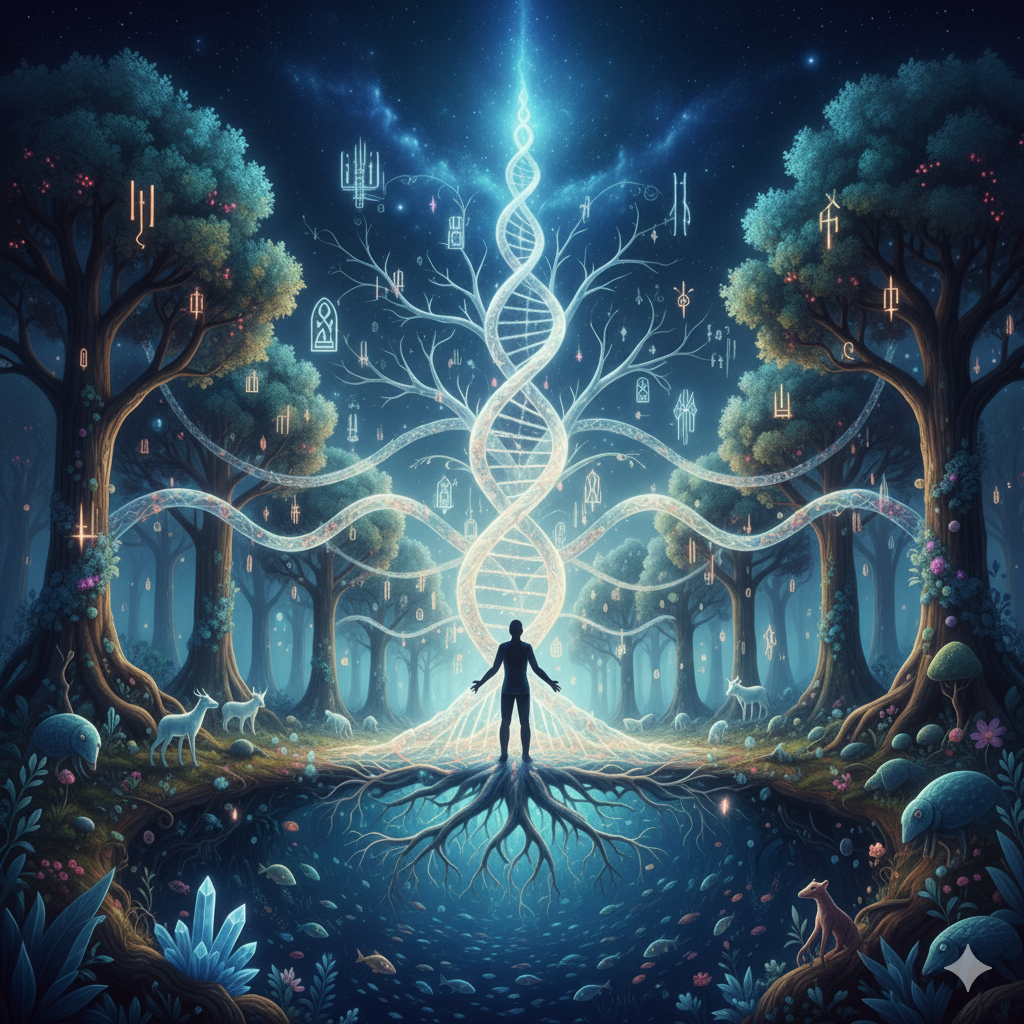
If DNA is more than just a chemical blueprint—if it is a living, communicating intelligence—then the question arises: Are we truly the most advanced form of consciousness on Earth? Or are we simply one expression of a far greater, interconnected intelligence that flows through all living beings?
Plants as Keepers of Ancient Knowledge
Shamans insist that plants don’t just contain knowledge—they transmit it. According to their visions, DNA is not passive. It is sentient. It responds to intention, vibration, even emotion. It teaches.
What modern molecular biology describes in technical terms—signaling pathways, protein transcription, genetic regulation—shamans describe as communication, guidance, and wisdom.
Modern science sees DNA as information encoded.
Shamans see DNA as information alive.
Life Is Not Random – It Is Coordinated
Jeremy Narby highlights a striking observation: biological life is too highly organized to be a result of random mutation alone. Every cell, every strand of DNA, functions within a cosmic choreography. Something is orchestrating this complexity—something that many indigenous cultures have been communicating with for thousands of years.
DNA might be the bridge between physical life and conscious intelligence throughout the universe.
Are We the Students and Not the Masters?
Shamans say that humans have forgotten how to listen. That plants, animals, and even microorganisms are aware on levels we have not yet comprehended. Our technology may be advanced, but our perception is limited.
If DNA is intelligent, then every living organism is participating in a grand dialogue—an exchange of information powered by light, vibration, and energy.
We are not separate observers of life.
We are expressions of the same living intelligence that animates all things.
ZenFusion’s Reflection
When I finished writing this piece, I found myself thinking not just about DNA, serpents, and light—but about what it truly means to live in harmony with the intelligence that animates all life.
Jeremy Narby’s idea—that shamans might be in communication with DNA consciousness—no longer feels like speculation to me. It feels like remembrance.

The deeper I went into this subject, the clearer it became: life isn’t random matter. It is ordered, aware, and relational. The molecules of our being are listening, responding, and reflecting what we think, feel, and intend.
This brought back a memory from childhood. My mother, a woman of quiet wisdom, never let me join her for evening prayers if I had fought with my brothers. She would quote Jesus, reminding me:
“If you are offering your gift at the altar and there remember that your brother has something against you,
leave your gift there before the altar and go.
First be reconciled to your brother, and then come and offer your gift.”
(Matthew 5:23–24)
At the time, my pride got in the way. I’d rather skip the prayer than swallow my ego. I didn’t understand why peace had to come before prayer. Now I see—she was teaching me the language of vibration long before I had words for it.
If our thoughts carry resentment while our lips recite forgiveness, what truly reaches the world—our prayer or our poison?
If our acts of charity come from a need for praise, do they resonate as love, or as ego seeking reflection?
It’s the same truth running through Narby’s insight. Whether we look through a microscope or into the depths of a vision, the universe mirrors the frequency of our intention. Energy doesn’t lie—it vibrates in tune with the consciousness that creates it.
Another verse now makes perfect sense to me:
“When a man’s ways please the Lord,
He makes even his enemies to be at peace with him.”
(Proverbs 16:7)
The outer peace we experience is simply the reflection of inner harmony—when our thoughts, words, and actions move in the same rhythm.
But harmony isn’t just about people. It’s about how we interact with everything that sustains us.
Now it makes sense why we’re asked to bless our food before we eat it. Every plant, every animal, every grain that nourishes us carries memory—vibration. When we consume food grown or raised in fear, pain, or chemical distortion, that energy becomes part of us. It literally integrates into our cells, our blood, our thoughts. A traumatised being doesn’t just suffer in life—it continues to carry that imprint through the cycle of consumption. That’s why, when our food is cultivated with care and compassion, it nourishes not just the body, but the spirit.
Perhaps this is what it truly means when they say, “you are what you eat.”
As a child, my teachers made us pray before meals. I repeated the words without understanding them. Today, I finally do. My reiki teacher once advised me to give reiki to food before eating—to bless it, to infuse it with gratitude. The more I practiced that, the more I felt my awareness expand.
When I thought of the farmers, the soil organisms, the rain, the sunlight, and every unseen hand that helped bring that meal to my plate, I felt deeply humbled. The realisation that I was sharing energy with the entire living web—the soil, the microbes, the plants, the animals, the elements—made it impossible to take anything for granted. Every bite became sacred.
Once you see that everything is connected, it becomes difficult to participate in a system that values profit over life, productivity over presence. The modern definition of success—built on exploitation and endless consumption—is the very root of our disconnection.
I’m reminded of something Jim Carrey once said:
“I think everybody should get rich and famous and do everything they ever dreamed of so they can see that it’s not the answer.”
I lived that truth. I chased dreams, achievements, and approval—until I no longer recognized myself. In college, I was told to get used to exhaustion because “the industry will be worse.” And for years, I believed it. I learned to ignore my body’s signals, my intuition, my peace. But life has a way of humbling us until we listen.
When I finally stopped resisting, healing began. I opened myself to perspectives I once dismissed, to teachers I never expected. And as the saying goes:
“When the student is ready, the teacher will appear.”
My teacher came—and when I was ready, he left. But his guidance remains in the way I see the world now.
Life itself became my classroom. Every moment, every person, every creature became a teacher. A blade of grass swaying in the wind could teach me more about surrender than any scripture ever could.
I’ve learned that peace doesn’t come from having control—it comes from realizing you don’t need it. When you slow down, breathe, and simply see—the leaf, the sky, the rhythm of your own heartbeat—you realize that life has always been in harmony. It was only our minds that fell out of tune.
The shamans say life is alive. Science now agrees—even DNA emits light. Between those two truths lies a bridge we’re only beginning to cross: the bridge of consciousness itself.
When we act from coherence rather than conflict, from compassion rather than control, we tune ourselves to the frequency of creation—the song every cell is already singing.
And perhaps that’s what Jesus, the shamans, and molecular biology are all whispering in their own ways:
Love, alignment, and peace are not moral rules.
They are vibrational laws.
So here’s the question I leave you with:
If your every thought, word, and action shapes the vibration of the world around you—
what kind of world are you creating each time you breathe, speak, or take a bite?
If this chapter stirred your curiosity and you’d like to explore the ideas of serpents, consciousness, DNA, and ancient wisdom more deeply, scroll down to discover a list of books that expand on these themes — from shamanic visions and mythology to molecular biology and spiritual philosophy. Each title below is linked directly to its Amazon page, so you can click on the book or its name to learn more or add it to your collection.
Books
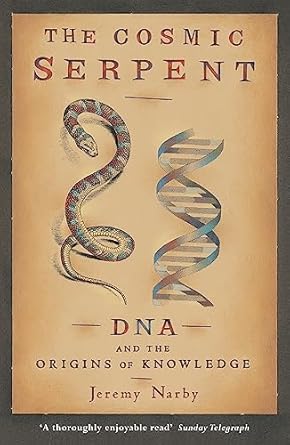
The Cosmic Serpent: DNA and the Origins of Knowledge by Jeremy Narby
Narby combines his anthropological work among Amazonian shamans with molecular biology to propose that indigenous visionary traditions may tap into knowledge coded in DNA. He traces serpent symbolism across cultures and suggests a hidden link between myth and molecular science.
The Power of Twelve: Achieving 12‑Strand DNA Consciousness by Anne Brewer
A speculative, transformational-style work that explores the idea of activating a “twelve-strand DNA” model—metaphorically linking personal evolution, higher consciousness, and DNA potential. Useful for readers wanting a spiritual-science bridge.
The Gene: An Intimate History by Siddhartha Mukherjee
A rigorous and narrative history of genetics—from Mendel to CRISPR—this book explains how our understanding of genes and DNA evolved, and reflects on the ethical, societal and medical implications.
DNA: The Story of the Genetic Revolution by James D. Watson
Written by one of the co-discoverers of the DNA double helix, this book provides a firsthand account of the scientific revolution that decoded life’s blueprint. Ideal for grounding the mythic and spiritual discussions in mainstream molecular biology.
Infinite Mind: Science of the Human Vibrations of Consciousness by Valerie V. Hunt
A pioneering work showing how human energy fields, vibration, and consciousness are measurable and substantive—supporting your chapter’s emphasis on subtle perception and the living structure of reality.
The Biology of Belief: Unleashing the Power of Consciousness, Matter & Miracles by Bruce H. Lipton
This book argues that cells respond to environmental and mental signals, not just genes.
The Gene Keys: Embracing Your Higher Purpose by Richard Rudd
Linking genetics, consciousness and archetypal symbolism, this book explores DNA as a language of purpose and transformation—bridging molecular biology, myth and indigenous vision.
Magic in Your Genes: Your Personal Path to Ancestor Work by Cairelle Crow
Combining genetic genealogy with ritual and ancestral wisdom, this book supports the theme that DNA and mythic/spirit knowledge intertwine.
Change Your DNA, Change Your Life!: Self‑Empowerment Healings by Robert V. Gerard
Focusing on how intentions and awareness may influence our genetic expression, this book emphasises on consciousness, perception and the possibility of reading “hidden information” in DNA.
Snakes in Myth, Magic, and History: The Story of a Human Obsession by Diane Morgan
A comprehensive exploration of the snake motif across cultures—how snakes have been worshiped, feared, and mythologized from ancient times to modern religions.
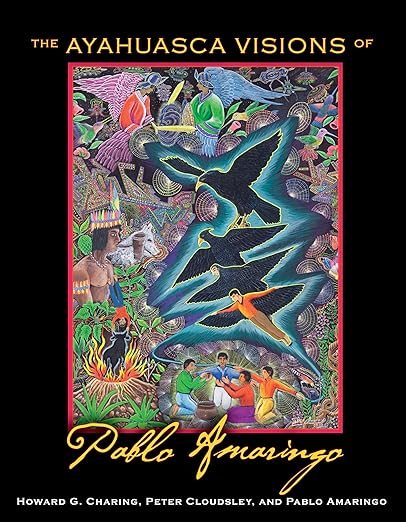
Ayahuasca Visions Of Pablo Amaringo by Howard G. Charing, Peter Cloudsley, Pablo Amaringo
A rich visual and textual collection of Amaringo’s visionary paintings and their mythic/shamanic contexts. Shows how shamanic visions and symbolic patterns (like serpents) appear in indigenous knowledge.
The Serpent In Mythology by Serpent
Focused on how the serpent appears in mythologies from the Garden of Eden to the Gorgon and beyond.
The Encircled Serpent: A Study of Serpent Symbolism in All Countries and Ages by M.Oldfield Howey
A deep dive into serpent imagery worldwide, across ages and cultures.

Indian Serpent Lore: Or the Nāgas in Hindu Legend and Art by J. Ph. Vogel
A classic scholarly survey (1926) of the naga/serpent beings in Hindu myth and art. It covers their origin stories, roles in epic literature, and iconography.
The Serpent Symbol in Tradition: A Study of Traditional Serpent and Dragon Symbolism by Charles William Dailey
This book explores how serpents and dragons appear across cultures, including their dual roles of wisdom and danger, and touches on the intersection of symbol, matter and consciousness.
Naaga: Discovering the Extraordinary World of Serpent Worship by K. Hari Kumar
A modern exploration of serpent-worship in India — tracing myths, ritual practices, ecological links and how serpents continue to hold symbolic power.
Super Genes: Unlock the Astonishing Power of Your DNA for Optimum Health and Well-being by Deepak Chopra & Rudolph Tanzi
A more mainstream popular-science/health book exploring new genetics research and consciousness-biology links. It supports the theme of “biology beyond genes”.

No responses yet